
Septic System Repair in Tyler, Texas
Septic problems rarely improve by being ignored, but the right repair can stop a small issue from becoming a major disruption. We diagnose the trouble, explain your options clearly, and repair the part of the system that needs attention.
About This Service
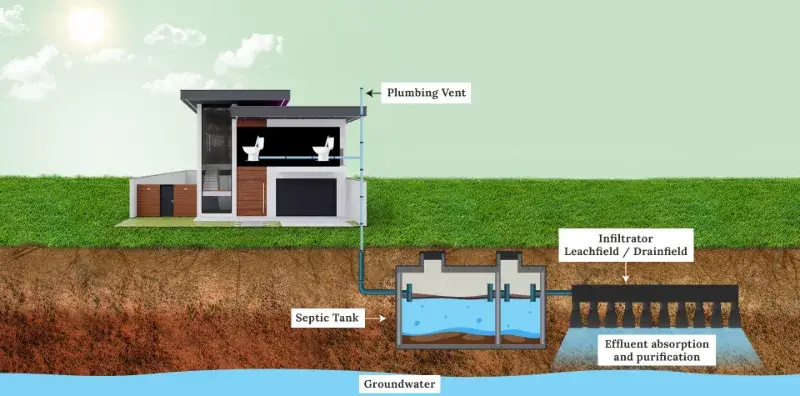
Septic system repair addresses the components that keep wastewater moving, separating, and dispersing correctly. That may mean repairing a damaged line, restoring a tank connection, replacing a worn lid or riser, correcting a baffle concern, or investigating a problem affecting the drain field. In Tyler, the goal is not simply to make a symptom disappear for a day; it is to identify the source and return your system to dependable operation.
Pay attention when multiple drains slow down, toilets gurgle, wastewater backs up, the yard develops persistent wet areas, or odors linger near the tank or disposal area. These signs can come from several causes, and they do not automatically mean the entire system needs replacement. Properties around Hollytree, the Azalea District, and neighborhoods near Grande Boulevard have different ages, layouts, and access conditions. A careful diagnosis prevents you from spending money on the wrong fix.
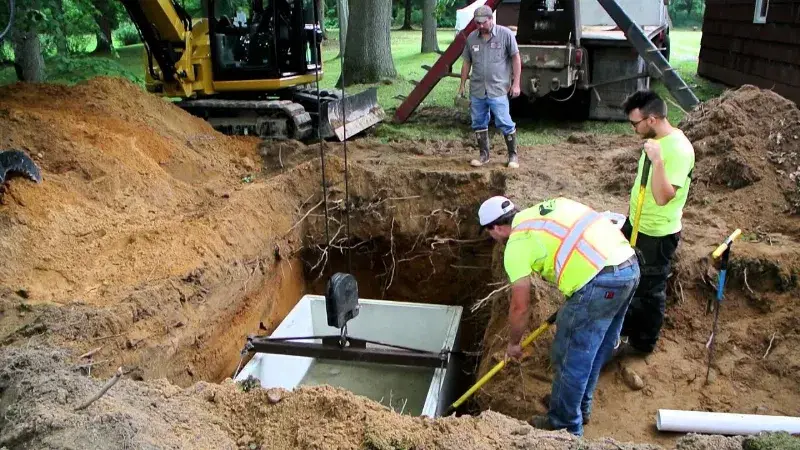
We begin by listening to what has changed and reviewing the history you know about the system. From there, we inspect the relevant accessible components and trace the likely cause of the trouble. Rose City Septic Co. explains the repair in straightforward terms, including what is urgent, what can be monitored, and what the work involves. Once you approve the plan, we complete the repair with focused excavation and attention to restoring the affected area as neatly as practical.
Some repairs can be completed quickly when the issue is isolated and accessible, while others need more investigation because underground systems do not always reveal the full story at the surface. Weather, soil saturation, access, and the condition of older components all influence the timeline. In Tyler, we avoid promising a shortcut before the system has been properly assessed. You will receive honest updates as the work moves from diagnosis to a tested, functional repair.
The result should be a system that handles normal household use without the stress of recurring symptoms. A sound repair can protect the tank and drain field from further strain, preserve your yard, and help you make informed maintenance decisions going forward. Our local team has served this area since 2005, bringing practical know-how, responsive communication, and workmanship centered on the needs of your property. We recommend repair when it is the sensible path, not as a default answer.
If you are dealing with a backup, foul odor, soggy ground, or unexplained drainage problem, getting answers early can make a real difference. From homes off Old Jacksonville Highway to properties near Lake Tyler and South Broadway Avenue, we are prepared to assess the issue and help you move ahead. Contact Rose City Septic Co. today to schedule septic system repair and get your routine back on track.
Diagnosis Before Quote: The Rule We Do Not Break
Slow drains, a wet patch in the yard, an odour after rain, a gurgle in the shower — these are the symptoms, and every one of them has several possible causes with wildly different price tags. A full tank, a failed air pump on an aerobic unit, a separated or crushed line, a clogged effluent filter, a control panel fault and a saturated absorption field all present the same way at the house.
The cheapest of those is a filter clean. The most expensive is a full system replacement. Any contractor who quotes the expensive one over the phone is guessing with your money.
We open the tank, check both compartments, inspect the inlet, outlet and baffle, test the pump and panel where the system is aerobic, and walk the disposal area. That is an afternoon, and it converts a guess into a decision. A meaningful share of calls that came in as assumed replacements turn out to be a pump, a line, a filter or a distribution fix.
In Smith County any alteration to an existing on-site sewage facility requires authorisation under 30 TAC Chapter 285, so once the diagnosis points to work that changes the system, we plan it, permit it through the county and get it inspected. Repairs done off the books are what turn up as problems at closing.
East Texas Failure Patterns Worth Recognising Early
Seasonal surfacing is the signature East Texas fault. A system that is fine all summer and soggy every February is almost never a tank problem. It is an absorption area that is undersized for wet-season conditions, because the clay-rich subsoils here perch water above them in winter and early spring and the field loses the capacity it appears to have in August. Caught at the soggy stage this is often a field extension. Caught after effluent reaches the surface it is usually a replacement.
Repeated pump-outs on a short cycle point at infiltration. Seasonal ground movement in shrink-swell clay cracks lids and separates tank connections, groundwater gets in, and the tank passes far more volume than the field was built for. Pumping treats the symptom and the tank refills.
Aerobic-specific faults have their own tells: a spray head not cycling, an alarm on the control panel, an odour that means the air pump or diffuser has stopped and the unit has gone anaerobic. These are usually inexpensive parts and become expensive only when ignored, which is exactly why Texas requires an aerobic unit to be under a maintenance contract with reports filed at least every four months.
And the avoidable one: a wet strip where a vehicle, trailer or livestock has been crossing the disposal area. Compacted soil does not recover, and that section of field is finished.
Septic Tank Repair Across Tyler and Smith County
Septic repair calls almost always start the same way: something is wrong at the house and nobody knows how expensive it is going to be. Slow drains, a wet patch in the yard, an odour after rain and a gurgle in the shower are the four symptoms, and each of them has several possible causes with wildly different price tags. That is why we diagnose before quoting, every time.
When people search septic repair near me around Tyler, they are usually hoping the answer is a part rather than a replacement. Often it is. A clogged effluent filter, a failed air pump, a tripped control panel, a crushed line or a separated baffle all present at the house exactly like a failing system, and all of them are a fraction of the cost. A meaningful share of the calls that come in assumed to be replacements turn out to be one of those.
Septic tank repair cost therefore has no honest phone answer. What it depends on is which component actually failed, whether the tank is sound, and whether the disposal area is still accepting what the household puts into it. Opening the tank, checking both compartments and walking the field answers that in an afternoon and converts a guess into a decision.
Any alteration to an existing on-site sewage facility requires authorisation from the county under 30 TAC Chapter 285. We plan, permit and get the work inspected, because septic repairs done off the books turn up as problems at closing when the property sells.
How the Job Actually Runs, Step by Step
No surprises is mostly a matter of telling you the order things happen in before they happen. This is how a job runs from your first call to the day it is signed off.
- You call with the symptomsSlow drains, a wet patch, an odour after rain, a gurgle in the shower. All four have several possible causes at very different prices.
- Diagnosis before any quoteTank opened, both compartments checked, inlet, outlet and baffle inspected, pump and panel tested on aerobic systems, disposal area walked.
- You get the actual fault and the actual numberA filter clean, a failed pump, a crushed line and a saturated field are four different jobs. We tell you which one you have.
- Permitting where the work alters the systemAny alteration to an on-site sewage facility needs county authorisation under 30 TAC Chapter 285. Repairs done off the books turn up as problems at closing.
- The repair, then a check that it heldWe come back to the symptom that started the call and confirm it is gone.
Why Rose City Septic Co.
- Working East Texas since 2005Two decades on Smith County ground. The soil behaviour described on this page is not research, it is what we dig through.
- We run the county process weeklySite evaluation, planning materials, permit to construct, final inspection. An installer who files these constantly moves them faster than one who does not.
- Diagnosis before the quote, every timeWe do not price a system or a repair over the phone. The boring log or the open tank decides the number, and we would rather lose the job than guess at it.
- Licensed for aerobic maintenance reportingTexas requires aerobic units to be under contract with a licensed maintenance provider filing reports at least every four months. We can hold that contract rather than leaving you to find someone who can.
- County-inspected, on the recordWork that alters a system gets permitted and inspected, so what you own is documented. That matters at resale far more than it does on the day.
- Local for realTyler, Whitehouse, Bullard, Flint, Lindale, Chandler, Jacksonville and Kilgore are the roads we work daily — not a service radius drawn on a map from another city.
When a Septic Repair Needs a Permit in Smith County
Not every septic repair is permitted work, but more of it is than homeowners expect. Under 30 TAC Chapter 285 and the local rules administered by Smith County Environmental Health, routine repairs to existing components tend to be handled as repairs, while anything that changes the design, capacity or location of the system is a modification that needs a planning package and a permit to construct before the work starts.
In practice, replacing a pump, a float switch, an effluent filter, a broken lid, a damaged baffle or a section of collapsed line sits on the repair side. Extending the drain field, moving a tank, converting from conventional to aerobic, or adding a bedroom that raises the design flow does not, and quietly doing that work anyway leaves the property with an on-site sewage facility that no longer matches its permit.
There is also a nuisance provision worth knowing about. Sewage surfacing on the ground or running off the property is a violation in its own right, which is why a failing system is not something the county treats as the owner's private business once effluent is visible. Getting the repair permitted and inspected is what closes that out.
We tell you which category the work falls into during the diagnosis, not after the invoice.
The Seasons That Break Septic Systems in East Texas
Septic failures here follow the calendar closely enough to predict. The wet months from late autumn through May are when the ground stops cooperating. A perched water table forms above the clay subsoil common to Smith County, the disposal area loses its capacity to absorb, and systems that were coping start backing up, surfacing and running slow. Rainwater getting into the tank through a cracked lid or a bad riser seal makes it worse by taking up capacity that sewage needs.
Summer breaks different things. Clay shrinks in drought and pulls joints apart, pipes settle, and pump motors and aerators run hot enough to shorten their lives noticeably. Then the first heavy rain swells everything back and the movement finishes off whatever the shrinkage started.
Winter cold snaps are short in East Texas but they account for a run of calls every year. Exposed spray lines, shallow lines under a driveway, and control panels in unprotected enclosures are what freeze.
There is also a household pattern worth naming. Holidays put four times the normal load on a system in a weekend, which is why so many failures announce themselves with a house full of guests. If yours has been marginal all year, that is the weekend it will pick.
Your Questions, Answered
Frequently Asked Questions
These answers address common septic questions from Tyler-area customers. Every property is different, so a direct conversation is the best way to apply this information to your system.
What septic problems can be repaired in Tyler?
Many system issues can be repaired, including damaged pipes, loose or deteriorated connections, broken lids, failing risers, baffle problems, and certain tank-related concerns. The right solution depends on where the failure is located and how much of the system has been affected. Surface symptoms alone do not identify the exact cause. A proper assessment helps distinguish a repairable component issue from a larger drain-field or replacement concern.
How much does septic system repair cost in Tyler?
Repair cost varies because the affected part, depth of excavation, access to the system, condition of surrounding components, and needed materials are different on every property. A visible lid or riser repair is very different from tracing and exposing an underground line. An evaluation identifies the work required and allows for a clearer scope. This approach helps you make a decision based on the actual problem rather than a broad estimate.
Can I use water while my septic system is being repaired?
That depends on the location and severity of the issue. For a backup, damaged line, or saturated area, reducing water use may be important until the repair is completed to prevent additional wastewater from entering the system. We will give you practical guidance based on what we find, including whether to avoid laundry, long showers, or other high-volume use. Following that guidance protects both your home and the repair area.
How can I prevent future septic repairs?
Regular pumping, prompt attention to slow drains or odors, and careful water use can reduce unnecessary stress on a septic system. Avoid flushing wipes, grease, harsh chemicals, and non-biodegradable items, because they can interfere with normal operation or clog components. Keep heavy vehicles away from the tank and drain-field area to prevent crushing underground parts. Maintaining records of pumping and repairs also makes future troubleshooting much easier.
What does septic tank repair cost in Tyler, TX?
There is no honest phone number for septic repair cost, because a clogged filter, a failed pump, a broken line and a saturated absorption field produce the same symptoms and differ enormously in price. We diagnose first — tank, baffles, pump, panel and disposal area — and then quote the actual fault. Diagnosis is an afternoon, and it regularly saves people a replacement they did not need.
Do you handle septic repair near me outside Tyler city limits?
Yes. Septic tank repair is most of what we do on unincorporated Smith County property and across Whitehouse, Bullard, Flint, Lindale, Chandler, Jacksonville and Kilgore. Where the repair alters the system, planning materials go to whichever county the parcel sits in.
My yard is soggy every spring but fine in summer. Is that a repair?
That is the classic East Texas seasonal pattern and it is usually an absorption area undersized for wet-season conditions rather than a tank fault. The clay subsoils here perch water in winter and early spring, so a field that copes in August surfaces in February. Caught at the soggy stage it is often a field extension; caught after effluent reaches the surface it is usually a replacement.
Does a septic repair need a permit in Smith County?
Any alteration to an existing on-site sewage facility requires authorisation under 30 TAC Chapter 285, with Smith County acting as the TCEQ authorized agent. Straight maintenance such as pumping or replacing a filter does not, but work that changes the system does. We handle the planning materials and the final inspection so the repair lands on the county record.
Get Clear Septic Answers Today
Talk with a local team that has served Tyler since 2005. Tell us about your property, and we will help you understand the right next step with a free estimate.
(903) 857-7325Or fill out the form — we'll be in touch shortly.