
Drain Field Repair in Tyler, Texas
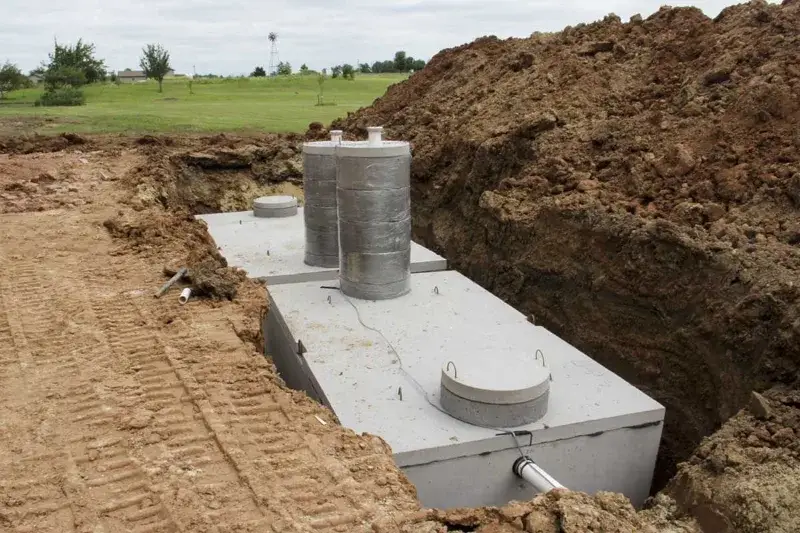
Drain field repair restores the part of your septic system that safely disperses treated wastewater into the soil. When the field is struggling, timely repair can protect your yard, reduce unpleasant odors, and help the rest of the system work as intended.
About This Service
Your drain field is the final stage of a septic system, where wastewater is dispersed into surrounding soil after leaving the tank. When that area cannot absorb water properly, the whole system can begin showing stress inside and outside the home. Drain field repair in Tyler starts with identifying why the field is underperforming rather than treating every symptom the same way. Depending on the site, the answer may involve repairing damaged lines, addressing distribution issues, improving drainage conditions, or planning a larger correction where the field has reached the end of its useful service life.
Wet or spongy ground, sewage-like odors, unusually lush strips of grass, recurring slow drains, and wastewater surfacing near the field should not be ignored. These signs often become more noticeable after heavy rain, when saturated soil has less capacity to handle additional water. Homes near Grande Boulevard, Faulkner Park, and other developed areas can also face challenges from mature roots, changed drainage patterns, or landscaping that has shifted over time. The sooner the cause is identified, the more options you may have for protecting the system and the yard.
We begin by listening to the history of the problem and reviewing the location of the tank, field, plumbing fixtures, and any recent changes to the property. Then we inspect the affected area for saturation, surface flow, damage, and signs of restricted distribution. That assessment helps separate a drain-field problem from a tank, filter, plumbing, or water-use issue. Once the source is clear, we explain the repair approach, the work area, and any site preparation needed before the job begins.
- Evaluate soil saturation and wastewater distribution
- Locate damaged or restricted field components
- Protect accessible landscaping during repair work
- Recommend repairs based on actual site conditions
The finished result should move wastewater away from the system more reliably and eliminate the conditions causing standing water, odors, or recurring backups. Repair timelines vary by access, weather, soil conditions, and the depth of the affected components. A focused line or distribution repair may be completed more quickly than a field-area correction requiring excavation and restoration. We keep you updated about what is found underground so there are no surprises about the scope of the work.
Rose City Septic Co. has served the area since 2005 with practical solutions built around the realities of East Texas properties. Our team treats the diagnosis as carefully as the repair because a drain field should not be excavated without a clear reason. We work thoughtfully around driveways, trees, and outdoor spaces, including sites near the Chapel Hill area and along State Highway 110. If wet ground or persistent septic symptoms are affecting your property, request a drain field evaluation and repair plan today.
Why Drain Fields Fail in East Texas Specifically
A drain field does not usually fail because it wore out. It fails for a reason, and around Tyler the reason is nearly always one of four, all of them tied to the ground here.
Undersizing is first. The Bowie, Kirvin and Sacul soils across Smith County put a fine sandy loam surface over a sandy clay loam to clay loam subsoil with permeability rated moderately slow. A field sized as though the whole profile drained is undersized from the day it was installed, and it will run fine through a dry summer and surface in a wet February when a perched water table forms above the clay layer. This is the most common failure we see and it is a design fault, not a maintenance fault.
Solids carryover is second. A missing or damaged outlet baffle, a neglected effluent filter, or a tank that has not been pumped in a decade sends solids into the field, and they clog the soil interface permanently. Pumping does not reverse it.
Hydraulic overload is third: a household that has grown, a leaking toilet, a water softener discharging to the tank, or roof and surface drainage directed across the absorption area.
Compaction is fourth, and it is entirely avoidable. Vehicles, equipment, livestock or a shed on the field crush the soil structure the system depends on. Compacted soil does not recover.
Repair, Extend or Replace: Getting the Diagnosis Right
These three have very different prices, and from the house they look identical. A proper diagnosis starts at the tank, because a failed tank baffle or an infiltrating tank will destroy a brand new field within a couple of years, and replacing the field without fixing the tank is money set on fire.
From there we look at what the field is actually doing: where water stands, how the distribution is behaving, whether one line is taking everything, and what the original design assumed versus what the soil evaluation says now. A field failing at one end because of distribution is a repair. A field that was always undersized for a clay subsoil is not repairable by patching, and extending it into properly evaluated ground is the honest answer.
Where a repair or extension will not carry the household, converting to an aerobic treatment unit with surface application is often the correct move on Smith County soils, because treated effluent needs far less absorption area than raw effluent does.
Any alteration to an existing on-site sewage facility requires authorisation from Smith County under 30 TAC Chapter 285, so the repair gets planned, permitted and inspected the same way an installation does. That is not bureaucracy for its own sake — it is what puts a documented, compliant system on the county record for when you sell.
Drain Field, Leach Field and Lateral Line Work in East Texas
Drain field, leach field and lateral field all name the same part of the system: the buried area where treated effluent leaves the tank and enters the soil. Around Tyler people use all three words, so leach field repair and septic field repair describe exactly the work we do here. What matters is not the terminology but whether the ground can still accept what the household is putting into it.
A field that has genuinely reached the end of its life needs drain field replacement rather than patching, and that is a design job, not a dig job. The replacement gets sized to a fresh soil evaluation instead of whatever assumption was made when the original went in, because on Bowie and Kirvin profiles a field sized for the topsoil is undersized from day one.
Leach field replacement cost is driven by three things: how much usable area is left once the property line, well and structure setbacks are applied, what the boring says the soil will accept, and whether converting to an aerobic unit with surface application would let the system work in a much smaller footprint. On tight lots that conversion is frequently cheaper than a septic leach field replacement large enough to work by gravity.
We diagnose before proposing septic drain field replacement, because a failed tank baffle will destroy a brand new field within a couple of years. Replacing the field without fixing the tank is money set on fire, and it is the most common expensive mistake we are called in to correct.
How the Job Actually Runs, Step by Step
No surprises is mostly a matter of telling you the order things happen in before they happen. This is how a job runs from your first call to the day it is signed off.
- You call, we talk about the propertyAcreage, bedroom count, whether there is a well, and what is already in the ground. Five minutes on the phone rules out half the wrong answers.
- Site evaluation and soil boringA registered sanitarian or professional engineer digs test holes and logs the profile. This is the step that decides your system type, and nothing before it is a real number.
- Design and planning materialsThe system is sized to the boring and the usable area left after every setback, then drawn up as planning materials for the county.
- County review and permit to constructSubmitted to whichever county your parcel sits in. Nobody breaks ground until the permit is issued.
- Installation, scheduled around the weatherEast Texas clay does not install well saturated. We plan the dig around the forecast rather than setting a tank in a muddy hole.
- County final inspectionThe authorized agent inspects before the system is covered and placed in service. That inspection is what puts a documented system on the county record.
- HandoverYou get the paperwork, the as-built location of the lids, and — on an aerobic system — the maintenance contract set up before we leave.
Why Rose City Septic Co.
- Working East Texas since 2005Two decades on Smith County ground. The soil behaviour described on this page is not research, it is what we dig through.
- We run the county process weeklySite evaluation, planning materials, permit to construct, final inspection. An installer who files these constantly moves them faster than one who does not.
- Diagnosis before the quote, every timeWe do not price a system or a repair over the phone. The boring log or the open tank decides the number, and we would rather lose the job than guess at it.
- Licensed for aerobic maintenance reportingTexas requires aerobic units to be under contract with a licensed maintenance provider filing reports at least every four months. We can hold that contract rather than leaving you to find someone who can.
- County-inspected, on the recordWork that alters a system gets permitted and inspected, so what you own is documented. That matters at resale far more than it does on the day.
- Local for realTyler, Whitehouse, Bullard, Flint, Lindale, Chandler, Jacksonville and Kilgore are the roads we work daily — not a service radius drawn on a map from another city.
Permits, Repairs and Where the County Draws the Line
Drain field work in Smith County falls under 30 TAC Chapter 285 and is permitted through Smith County Environmental Health. The dividing line the county cares about is repair versus replacement. Clearing a blocked line, resetting a distribution box, replacing a failed pump or fixing a broken lateral is generally handled as a repair. Adding trench length, relocating the field or changing the disposal method is a system modification and needs a planning package and a permit before anyone digs.
That distinction is worth knowing before you accept a quote. A contractor who cuts new trenches without a permit leaves you with an unpermitted system, and that surfaces later at exactly the wrong moment, usually during a property sale when a buyer's lender wants a compliant on-site sewage facility.
A replacement field needs a fresh site evaluation with soil borings, because the original design may date back decades and the county is sizing to today's rules. Setbacks from wells, property lines, foundations and surface water apply again, and on a lot where the first field used the only good ground, the honest answer is sometimes a different system type rather than a bigger field.
We run the diagnosis before we quote, so you find out which side of that line your job sits on before money changes hands.
The Wet Season Is When Drain Fields Tell the Truth
Most drain field failures in Smith County are discovered between December and April, and that is not a coincidence. East Texas takes the bulk of its rain from late autumn through May, and the dense clay subsoil in the Bowie, Kirvin and Sacul series holds a perched water table above it. A field that had somewhere to send water in September has nowhere to send it in February, and the symptoms arrive all at once.
That seasonality is also why a field can appear to recover on its own. Ground dries out in early summer, the soggy patch disappears, the smell goes, and the homeowner concludes the problem fixed itself. It did not. The biomat that clogged the trench is still there and the next wet season will be worse, usually with less warning.
A field genuinely killed by a biomat, by years of solids carryover from an unpumped tank, or by root intrusion from pines and sweetgums, does not come back with a rest period. One that failed because of a broken line, a collapsed distribution box or a dead pump is a repair, and telling those apart is the whole point of the diagnosis.
We would rather come out in the wet season and see the field at its worst, because that is the honest picture of what it can take.
Common Questions Answered
Frequently Asked Questions
These answers address common septic questions from Tyler-area customers. Every property is different, so a direct conversation is the best way to apply this information to your system.
How do I know if my drain field needs repair in Tyler?
Common warning signs include wet or soft ground above the field, sewage odors outdoors, slow drains throughout the home, or water surfacing where it should not. These symptoms may worsen after rain, but rain alone does not always mean the field has failed. A site evaluation helps determine whether the problem is in the drain field, tank, plumbing, or distribution components. Getting answers early can help prevent a messy backup.
What affects the cost of drain field repair?
The cost depends on the cause of the failure, the amount of excavation needed, the condition of existing lines, site access, and whether damaged landscaping or hardscape must be worked around. A localized distribution issue is not priced the same as a larger soil absorption problem. We inspect the conditions before recommending a repair path. That approach helps avoid paying for work that does not address the actual cause.
Can a drain field be repaired without replacing the whole septic system?
In many cases, yes. Damaged pipes, restricted distribution components, surface drainage problems, and certain localized issues can sometimes be corrected without replacing the entire system. However, a field that is broadly saturated or no longer absorbing wastewater may need a more extensive solution. The right answer depends on the property and the condition found during evaluation. We explain the available options clearly before work begins.
What should I do while waiting for drain field repair?
Reduce water use as much as practical by spacing out laundry, taking shorter showers, and avoiding large loads from multiple fixtures at once. Do not drive, park, or place heavy equipment over the drain-field area, since compacted soil can make drainage worse. Keep people and pets away from any standing wastewater. If sewage is backing up inside, stop using water fixtures and request service promptly.
What is the difference between drain field repair and leach field repair?
Nothing — they are two names for the same component and the same work. Drain field, leach field and lateral field all describe the buried area that receives effluent from the tank. Around East Texas all three terms get used interchangeably, so septic field repair, leach field repair and drain field repair all refer to the job we do.
What does leach field replacement cost around Tyler?
Leach field replacement cost turns on how much usable area remains after property line, well and surface water setbacks, and on what the soil boring says the ground will accept. On Smith County clay a gravity field needs a large area, so on constrained lots converting to an aerobic unit with surface application is often less expensive than a septic leach field replacement sized to work by gravity. We price it after the evaluation.
Can a drain field be repaired, or does it always need replacing?
It depends on why it failed. A field failing at one end because of distribution is a repair. A field that was always undersized for a clay subsoil is not repairable by patching, and extending it into properly evaluated ground is the honest answer. Either way we check the tank first, because a failed baffle will ruin a new field within a couple of years.
Does septic drain field replacement need a county permit?
Yes. Replacing or extending a drain field alters the on-site sewage facility, which requires authorisation under 30 TAC Chapter 285 through the county acting as TCEQ authorized agent. That means planning materials, a permit to construct and a final inspection — which also puts a documented, compliant system on the county record for when you sell.
Get Clear Septic Answers Today
Talk with a local team that has served Tyler since 2005. Tell us about your property, and we will help you understand the right next step with a free estimate.
(903) 857-7325Or fill out the form — we'll be in touch shortly.