
Aerobic Septic System Installation in Tyler, Texas
An aerobic septic system uses treatment components to handle wastewater where a conventional layout may not be the right fit. It can be a practical option for properties with limited space, challenging soil, or specific site requirements.
About This Service
An aerobic septic system installation creates a more advanced wastewater treatment setup for properties where a conventional system may not be suitable. The system uses oxygen and treatment components to process wastewater before it moves through the approved disposal method. In Tyler, aerobic designs are often considered when soil, lot size, drainage, or site layout calls for a different approach. The goal is not to add complexity for its own sake; it is to build a system that fits the property and can be maintained properly.
You may need to explore an aerobic option when a site has limited room for a conventional drain field, challenging soil conditions, or a replacement area that is difficult to position. This can come up on compact lots near the Azalea District, properties along University Boulevard, or land with established improvements near Rose Rudman Trail. Signs of a struggling older system, such as recurring backups, wet ground, or odors, also deserve a prompt professional assessment. The right answer depends on the site and applicable project requirements.
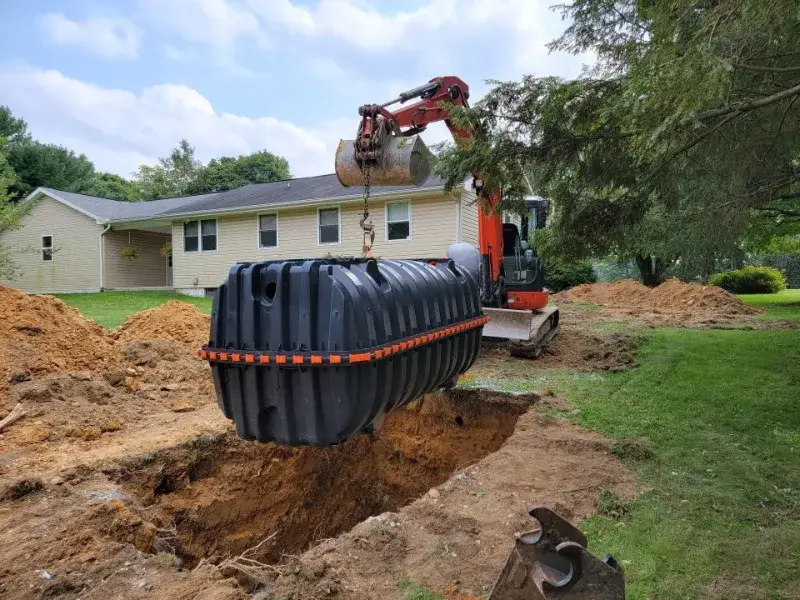
We begin by learning how the property will be used and reviewing the available installation area. That includes discussing the building size, anticipated water use, utility locations, access for excavation, and where treatment equipment can be placed for future service. After the system plan and required approvals are addressed, our crew prepares the site, sets the tank and treatment components, completes connections, and tests the setup. We keep you informed so you understand the work rather than seeing unfamiliar equipment appear without context.
A properly installed aerobic system should provide reliable treatment with a maintenance routine that is easy to follow. It generally includes mechanical and electrical components, so ongoing service is an important part of protecting performance. The construction schedule varies with weather, approval timing, and site access, but careful coordination helps reduce unnecessary delays. On properties near Hollytree or east toward Chapel Hill, we also consider practical access for future inspections and service visits.
Rose City Septic Co. has served the area since 2005 with a focus on careful planning, responsive communication, and durable work. Aerobic systems require attention to both installation details and long-term usability, which is why we explain the system in plain terms before the job is complete. You are not handed a complicated setup without guidance. Instead, you get practical information about what the system does, where components are located, and what to watch for over time.
If your property needs a treatment solution beyond a conventional septic layout, a site review is the right place to begin. We can discuss the conditions that may affect aerobic septic system installation in Tyler and help you understand the next steps. Contact our team today to start planning a system built around your land and daily needs.
The Texas Aerobic Maintenance Rule, Explained Properly
This is the part of aerobic ownership that nobody explains before the sale, and it is a legal obligation rather than a service upsell. Under 30 TAC 285.7, an aerobic treatment unit in Texas must be covered by a contract with a licensed maintenance provider. A licensed provider holds an Installer Class II licence, a Class C or higher wastewater operator licence, or three years as a registered maintenance provider, plus TCEQ-approved coursework and a passed exam. Your neighbour with a truck does not qualify.
The provider inspects every component at each site visit and documents whether each one functions. Reports go to both the permitting authority and the owner at least once every four months, or every six months where approved electronic monitoring is installed, and each report must be filed within fourteen days of the test and include any owner complaints or monitoring notices.
Two years after installation, homeowners may take over maintenance themselves on certain system types — secondary treatment, non-standard treatment, drip irrigation and surface application — but the local permitting authority is free to impose stricter requirements, and many do. Do not assume the two-year provision applies to you without checking with Smith County.
The practical reading: an aerobic system is a piece of equipment with a compliance calendar attached. Budget for it at purchase. A lapsed contract is a compliance problem, and long before it becomes that, it is how a fifty-dollar diffuser becomes a two-thousand-dollar rebuild.
Why Aerobic Dominates Around Tyler
Aerobic systems are not more popular in Smith County because they are fashionable. They are more common because the ground here rarely supports the alternative. The Bowie, Kirvin and Sacul soils that cover most of the county carry a sandy loam surface over a clay-rich subsoil with moderately slow permeability, and a perched water table forms above that clay in winter and early spring.
A conventional gravity drain field disposes of untreated effluent into the soil and needs enough area for the soil to do the treating. When the accepting layer is slow clay, that area becomes very large — larger than most Tyler-area lots have once the house, driveway, well and setbacks are placed. An aerobic unit treats the effluent first, so the disposal area can be dramatically smaller and can use surface spray rather than trenches.
That trade is real and it is worth understanding before you sign. You get a system that fits your lot and handles East Texas clay. You take on a mechanical system with an air pump, a control panel, electricity, and a permanent maintenance obligation.
Sizing follows bedroom count and actual household use, not square footage, and spray field layout has to respect property lines, the well, structures and any surface water. On smaller lots around Whitehouse and Bullard, the spray area layout is often what constrains the design, which is another reason the site evaluation comes before the quote.
Aerobic Septic System Cost and Why Texas Uses Them
An aerobic septic system — often called an aerobic septic tank, though the treatment unit is only part of it — introduces oxygen so bacteria break down waste far more completely than they do in a sealed tank. The effluent that leaves is clean enough to disperse over a much smaller area, usually by surface spray. That is the entire reason the design dominates around Tyler.
Aerobic septic system cost runs higher than a conventional installation up front, and it carries an ongoing maintenance obligation that a conventional system does not. What buys back the difference is area: on Smith County clay a gravity field needs more square footage than most lots have once the house, driveway, well and setbacks are placed. Comparing aerobic septic system cost against anaerobic septic system cost only makes sense once you know whether your lot can physically support the anaerobic option at all.
The other half of the number is the obligation. Texas requires an aerobic treatment unit to be under contract with a licensed maintenance provider, with inspection reports filed to the permitting authority and the owner at least every four months, or every six months where approved electronic monitoring is installed. Budget for that at purchase rather than discovering it at the first inspection.
We size aerobic systems on bedroom count and real household water use, not square footage, and we lay out the spray field to respect property lines, the well, structures and any surface water. On smaller lots around Whitehouse and Bullard the spray area layout is usually what constrains the design, which is another reason the site evaluation comes before the quote.
How the Job Actually Runs, Step by Step
No surprises is mostly a matter of telling you the order things happen in before they happen. This is how a job runs from your first call to the day it is signed off.
- You call, we talk about the propertyAcreage, bedroom count, whether there is a well, and what is already in the ground. Five minutes on the phone rules out half the wrong answers.
- Site evaluation and soil boringA registered sanitarian or professional engineer digs test holes and logs the profile. This is the step that decides your system type, and nothing before it is a real number.
- Design and planning materialsThe system is sized to the boring and the usable area left after every setback, then drawn up as planning materials for the county.
- County review and permit to constructSubmitted to whichever county your parcel sits in. Nobody breaks ground until the permit is issued.
- Installation, scheduled around the weatherEast Texas clay does not install well saturated. We plan the dig around the forecast rather than setting a tank in a muddy hole.
- County final inspectionThe authorized agent inspects before the system is covered and placed in service. That inspection is what puts a documented system on the county record.
- HandoverYou get the paperwork, the as-built location of the lids, and — on an aerobic system — the maintenance contract set up before we leave.
Why Rose City Septic Co.
- Working East Texas since 2005Two decades on Smith County ground. The soil behaviour described on this page is not research, it is what we dig through.
- We run the county process weeklySite evaluation, planning materials, permit to construct, final inspection. An installer who files these constantly moves them faster than one who does not.
- Diagnosis before the quote, every timeWe do not price a system or a repair over the phone. The boring log or the open tank decides the number, and we would rather lose the job than guess at it.
- Licensed for aerobic maintenance reportingTexas requires aerobic units to be under contract with a licensed maintenance provider filing reports at least every four months. We can hold that contract rather than leaving you to find someone who can.
- County-inspected, on the recordWork that alters a system gets permitted and inspected, so what you own is documented. That matters at resale far more than it does on the day.
- Local for realTyler, Whitehouse, Bullard, Flint, Lindale, Chandler, Jacksonville and Kilgore are the roads we work daily — not a service radius drawn on a map from another city.
Permits, Licensing and the Maintenance Contract Texas Requires
Aerobic systems sit under the same 30 TAC Chapter 285 framework as any other on-site sewage facility, permitted and inspected through Smith County Environmental Health, but they carry an extra obligation that conventional systems do not. Under 285.7, a residential aerobic unit with surface application has to stay under a maintenance contract with a licensed maintenance provider, and that provider files service reports with the county on a set schedule.
That means the permit to operate is conditional. Let the contract lapse and the system is out of compliance even if it is running perfectly. Most of the enforcement letters we see in Smith County are not about failed equipment at all, they are about missing reports.
The install itself follows the standard county path. Site evaluation with soil borings, a planning package showing the treatment unit, the chlorinator, the pump tank and the spray field layout with its setbacks, the permit to construct, then a final inspection before start-up. Spray heads have to stay clear of property lines, buildings and water features, and the wetted area has to sit entirely on the owner's property, which is what usually drives the layout on a smaller tract.
We are licensed to carry the maintenance side as well as the install, so the contract is in place from day one and the reports go in on time rather than becoming your problem six months after the truck leaves.
How East Texas Weather Treats an Aerobic System
Aerobic systems are the common answer in Smith County precisely because of the weather and the soil. Where Bowie, Kirvin and Sacul clays sit close enough to the surface that a conventional gravity field cannot absorb what a household produces, a treatment unit with surface application puts treated effluent out through spray heads instead of relying on the subsoil to take it.
That trade brings its own seasonal behaviour. Through the wet months from late autumn into May, spray application onto already saturated ground produces ponding and runoff, and a wetted area that is too small or badly placed shows it first in February. Sizing and layout have to assume the ground will be wet, not average.
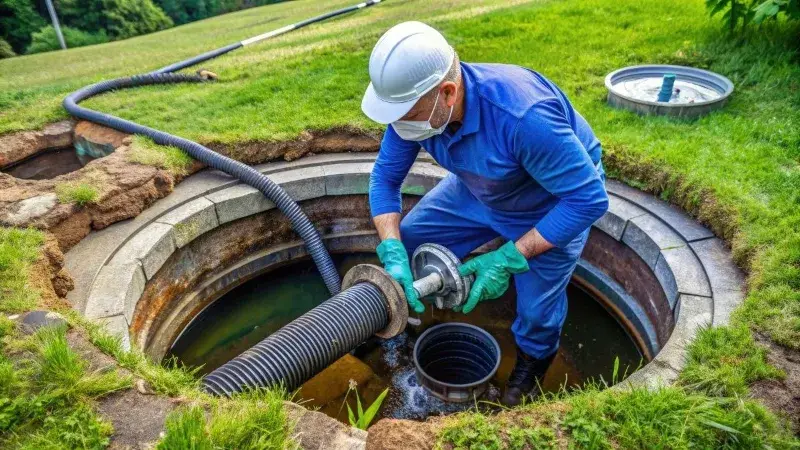
Summer is easier on the field and harder on the equipment. Aerators run continuously through hundred degree afternoons in an insulated enclosure, and heat is what shortens their life. Chlorine tablets also dissolve faster in warm weather, so the chamber empties sooner than owners expect and disinfection quietly stops.
Freezes are brief here but they still catch systems out. Exposed spray lines, shallow pump lines and control panels take the damage, usually on the two or three genuinely cold nights a winter. We install with those nights in mind rather than the average.
Everything You Need to Know
Frequently Asked Questions
These answers address common septic questions from Tyler-area customers. Every property is different, so a direct conversation is the best way to apply this information to your system.
When is an aerobic septic system needed in Tyler?
An aerobic system may be considered when soil conditions, lot size, drainage, or available disposal area make a conventional design unsuitable. It can also be a practical option for certain replacement projects where the existing layout no longer works. The decision should be based on a property review and the applicable requirements. A site-specific conversation is the best way to determine whether aerobic treatment is appropriate.
How long does aerobic septic system installation take?
Timing depends on planning, approvals, weather, equipment access, and the complexity of the site. The construction phase can move efficiently once the design and project requirements are in place, but wet conditions may affect excavation schedules. Aerobic systems also involve treatment and electrical components that need careful setup. We outline the expected work sequence so you know what to anticipate before installation begins.
What happens during an aerobic septic installation?
The process includes reviewing the property, planning the system location, preparing the installation area, and placing the tank and treatment equipment. Connections are made according to the approved design, and the system is checked before the work is wrapped up. Equipment needs clear access, so gates, utilities, and outdoor improvements should be discussed in advance. You will receive an overview of the components and their future service needs.
What maintenance does an aerobic septic system need?
Aerobic systems need regular professional maintenance because they use treatment equipment and often include electrical or alarm components. You should also protect the system by conserving water, avoiding grease and wipes, and keeping vehicles away from designated treatment and disposal areas. Follow the maintenance schedule appropriate for your setup. Report alarms, odors, unusually wet ground, or plumbing changes promptly so small issues can be addressed early.
What does an aerobic septic system cost in Tyler, TX?
Aerobic septic system cost is higher than a conventional installation up front and carries a permanent maintenance obligation, but on most Smith County soils it is the design that actually fits the lot. The number tracks bedroom count, the usable disposal area left after setbacks, and site access. We price it after the soil evaluation, and we include the annual maintenance contract figure so you are comparing the whole cost.
How does aerobic septic system cost compare to anaerobic septic system cost?
An anaerobic (conventional) system is cheaper to install and has no mandatory maintenance contract, so where the soil and the lot support one it is usually the better value. The catch is that the clay-rich subsoils across Smith County have moderately slow permeability, so a gravity field needs far more area than most lots provide. The comparison is only real once the boring shows whether anaerobic is viable on your ground.
Is an aerobic septic tank the same thing as an aerobic septic system?
People use the terms interchangeably. Strictly, the aerobic treatment unit is one component; the system also includes the pump tank, control panel, alarm and the spray or drip disposal field. It matters because the maintenance obligation and most of the mechanical failure points sit outside the tank itself.
Does an aerobic septic system have to be serviced by a licensed provider?
Yes. Under 30 TAC 285.7 an aerobic treatment unit must be covered by a contract with a licensed maintenance provider, and reports must reach the permitting authority and the owner at least every four months, or every six months with approved electronic monitoring. Two years after installation homeowners may take over maintenance on certain system types, but the local authority can require otherwise — confirm with Smith County before assuming it applies.
Get Clear Septic Answers Today
Talk with a local team that has served Tyler since 2005. Tell us about your property, and we will help you understand the right next step with a free estimate.
(903) 857-7325Or fill out the form — we'll be in touch shortly.