
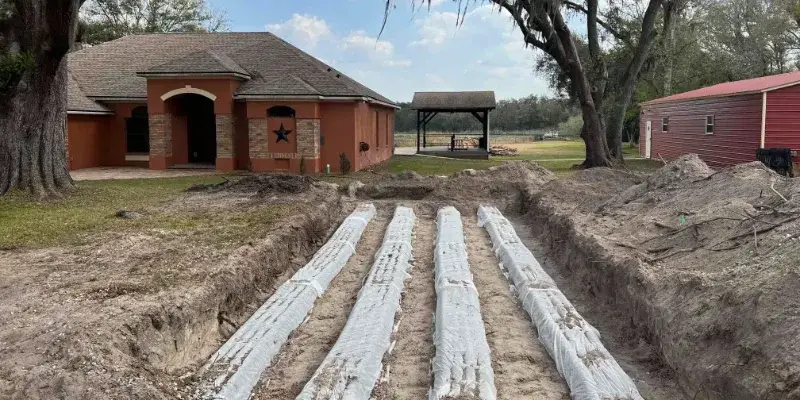
Septic System Installation in Tyler, Texas
A properly planned septic system gives your property a dependable way to handle wastewater every day. From a new build to a replacement system, the goal is a layout that fits the site, the soil, and the way you use the property.
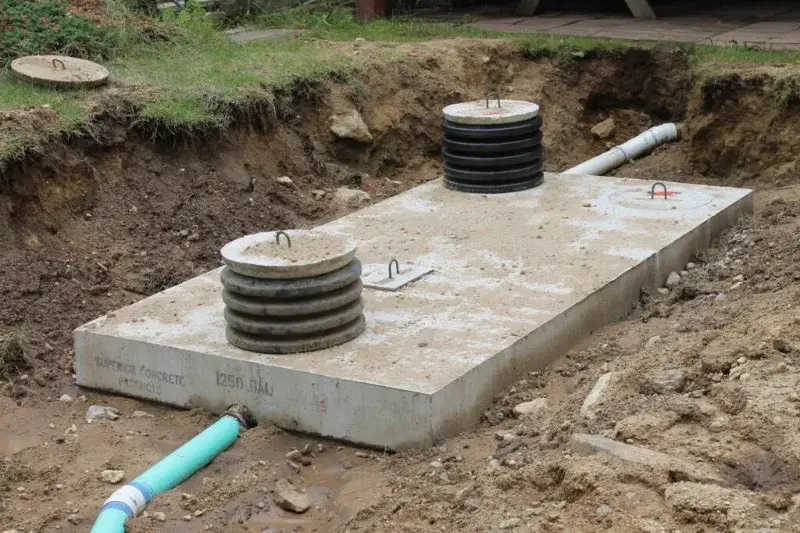
About This Service
Septic system installation is more than setting a tank in the ground. It is a complete wastewater solution built around your lot, household needs, soil conditions, and drainage area. In Tyler, a well-planned system helps protect your yard from backups and standing water while giving you a dependable setup for daily living. Whether you are building near Lake Tyler or replacing an aging system on an established lot, the finished result should feel simple: wastewater moves where it needs to go, and your property stays usable.
Slow drains throughout the house, sewage odors outdoors, wet patches over the drain field, or a system that can no longer keep up are signs it may be time to look at replacement. New construction also needs septic planning early, before driveways, patios, and landscaping limit the available space. Lots around Old Jacksonville Highway, the Azalea District, and the outskirts toward Whitehouse can vary widely in slope, tree cover, and soil. Those site details matter when selecting the right system layout.
Our process starts with a conversation about the property and the reason for the installation. We review the site, discuss expected water use, identify access for equipment, and help you understand the steps needed before work begins. Once the system plan and required approvals are in place, our crew prepares the area, installs the components, connects the system, and keeps the work zone organized. You will know what is happening at each stage instead of being left to guess.
After installation, you should have a system designed for practical daily performance and straightforward care. The actual work schedule depends on weather, site access, approvals, and the system type, but careful preparation helps keep the project moving. We also explain where key components are located and what habits support long-lasting performance. That guidance is especially useful on wooded properties near The Woods or larger residential lots off South Broadway Avenue, where future landscaping and access should be considered.
Since 2005, Rose City Septic Co. has focused on responsive service, honest communication, and workmanship suited to East Texas properties. We do not treat every lot as though it has the same drainage or space limitations. You get a crew that pays attention to the site, respects your concerns, and works toward a clean, dependable outcome. Local property managers can also rely on clear project coordination when a property needs a new wastewater system.
If you are planning a build, dealing with a failing system, or simply want clear answers before making a decision, now is a good time to start. A site-specific discussion can prevent expensive surprises later and help protect the value and usability of your land. Reach out to schedule septic system installation in Tyler and get a practical plan for the next step.
How Smith County Permits a New Septic Installation
Every new on-site sewage facility in Smith County is governed by 30 TAC Chapter 285, the state rule the TCEQ administers through county authorized agents. Smith County is the authorized agent here, and it contracts the working end of the programme — planning material review, permits to construct and final inspections — to a designated environmental office. That office issues your permit and signs off on the finished system.
The order of operations is not negotiable, and it is where most delays come from. A registered sanitarian or professional engineer performs the site evaluation and produces the planning materials. Those go to the county for review. Only after a permit to construct is issued does anyone break ground. When the system is installed, the county inspects it before it may be covered and placed in service. A system buried before inspection is a system that may have to be uncovered.
Two local thresholds catch Tyler-area homeowners regularly. Smith County requires a minimum half-acre lot for a new on-site system unless the lot was platted before 1989, which affects older streets in and around Tyler. And under 30 TAC 285.3, a single-family home on ten acres or more can be exempt from permitting and inspection provided the system keeps 100 feet from every property line and creates no nuisance. Exempt from permitting is not exempt from building it properly, and an undocumented system is a problem at resale.
We schedule the site evaluation as the first step on every installation rather than quoting a system type over the phone. The boring log is what determines the system, the tank size and the disposal area, and no honest number exists before it.
East Texas Soil Is Why Your Neighbour's System Failed
Smith County sits on the Bowie, Kirvin and Sacul soil associations. The Bowie series is typical: a very deep, well drained soil with six to eighteen inches of fine sandy loam over a sandy clay loam to clay loam argillic horizon, permeability rated moderately slow, and a perched water table that forms roughly three and a half to five feet down in winter and early spring.
That profile is the single most important fact in East Texas septic design, and it is what generic Texas septic advice ignores. Hill Country limestone, Gulf Coast clay and Panhandle caliche all behave differently. Here, the surface drains well enough to convince a homeowner the ground is fine, while the layer that actually has to accept effluent for thirty years is a dense clay that accepts it slowly.
A conventional gravity drain field sized as though the whole profile drained will work through a dry summer and surface in the yard in February. That is not an installation defect. It is a design that read the topsoil and stopped there.
Which is why a large share of new installations around Tyler are aerobic treatment units with surface spray. Treating effluent to a higher standard before disposal lets the system work within a much smaller absorption area — exactly what a moderately slow subsoil can accept. On tracts with deeper sand, toward Flint and Lake Palestine, a properly designed subsurface field remains viable. The boring decides, not the catalogue.
Slope is the last variable. Bowie soils on five to eight percent slopes shed water quickly, concentrating runoff across a disposal area placed without regard to the fall of the land. Where the system goes is part of the design.
Choosing a Septic Company in Tyler and Smith County
Septic system installation is the largest single job most rural East Texas properties will ever put in the ground, and picking the septic company matters more than picking the tank. Smith County requires the site evaluation to come from a registered sanitarian or professional engineer, and the permit to construct has to be issued before anyone digs. A septic installer who runs that process weekly moves it faster than one who does not.
When people search for a septic company near me around Tyler, they are usually trying to work out two things: whether the outfit is actually local, and whether it will still be reachable in five years when the system needs service. Rose City Septic Co. has worked East Texas since 2005 and covers Tyler, Whitehouse, Bullard, Flint, Lindale, Chandler, Jacksonville and Kilgore.
Septic tank installation and septic system installation are the same job described two ways. The tank is one component; what determines whether the system lasts is the disposal area, and that is decided by the soil boring rather than the brochure. Plenty of septic companies will quote a system type over the phone. We will not, because the number is not real until the ground has been looked at.
If you are comparing septic systems contractors, ask each one whether the quote includes the site evaluation, the county permit and the final inspection, and what happens if the excavation hits rock or an unrecorded old system. Those three answers separate a complete quote from one with a hole in it.
How the Job Actually Runs, Step by Step
No surprises is mostly a matter of telling you the order things happen in before they happen. This is how a job runs from your first call to the day it is signed off.
- You call, we talk about the propertyAcreage, bedroom count, whether there is a well, and what is already in the ground. Five minutes on the phone rules out half the wrong answers.
- Site evaluation and soil boringA registered sanitarian or professional engineer digs test holes and logs the profile. This is the step that decides your system type, and nothing before it is a real number.
- Design and planning materialsThe system is sized to the boring and the usable area left after every setback, then drawn up as planning materials for the county.
- County review and permit to constructSubmitted to whichever county your parcel sits in. Nobody breaks ground until the permit is issued.
- Installation, scheduled around the weatherEast Texas clay does not install well saturated. We plan the dig around the forecast rather than setting a tank in a muddy hole.
- County final inspectionThe authorized agent inspects before the system is covered and placed in service. That inspection is what puts a documented system on the county record.
- HandoverYou get the paperwork, the as-built location of the lids, and — on an aerobic system — the maintenance contract set up before we leave.
Why Rose City Septic Co.
- Working East Texas since 2005Two decades on Smith County ground. The soil behaviour described on this page is not research, it is what we dig through.
- We run the county process weeklySite evaluation, planning materials, permit to construct, final inspection. An installer who files these constantly moves them faster than one who does not.
- Diagnosis before the quote, every timeWe do not price a system or a repair over the phone. The boring log or the open tank decides the number, and we would rather lose the job than guess at it.
- Licensed for aerobic maintenance reportingTexas requires aerobic units to be under contract with a licensed maintenance provider filing reports at least every four months. We can hold that contract rather than leaving you to find someone who can.
- County-inspected, on the recordWork that alters a system gets permitted and inspected, so what you own is documented. That matters at resale far more than it does on the day.
- Local for realTyler, Whitehouse, Bullard, Flint, Lindale, Chandler, Jacksonville and Kilgore are the roads we work daily — not a service radius drawn on a map from another city.
Smith County Permits and the OSSF Rules That Govern a New Install
A new septic system in Smith County is not a job you can legally start on a Saturday and finish on a Sunday. On-site sewage facilities in Texas are governed by 30 TAC Chapter 285, and Smith County Environmental Health acts as the authorised agent that reviews, permits and inspects the work locally. Nothing gets covered with dirt until an inspector has looked at it.
The sequence almost never changes. A site evaluation comes first, with soil borings or backhoe pits dug to at least two feet below the proposed excavation so the profile, restrictive horizons and any seasonal water table are on record. That profile is what picks the system, not the budget and not the size of the lot. A planning package then goes to the county with the design, the drain field sizing, the setbacks and the site drawing. Once the permit to construct is issued, the install happens, and a final inspection has to pass before the trenches are backfilled and the permit to operate is issued.
Setbacks are where homeowners get caught out. Tanks and disposal areas have to stay clear of water wells, property lines, foundations, easements, sharp slopes and surface water, and on tighter lots those distances are often what decides whether a conventional field fits at all. A ten-acre-or-larger tract with a single family home may fall under the 285.3 exemption, but that exemption is narrower than people assume and the drainage and setback rules still apply.
We file this paperwork constantly rather than occasionally, which is the practical difference. The plan goes in complete the first time, the inspector is not chasing missing detail, and the job does not sit idle waiting for a resubmission.
East Texas Weather, Soil and the Right Time to Install
Smith County soils are the reason septic design here does not look like septic design an hour west. Bowie, Kirvin, Sacul and Nacogdoches series ground gives you sandy loam on top and a dense clay subsoil underneath, and that clay is what your drain field has to push water into. Percolation slows sharply once the trench bottom reaches it, which is why two neighbouring properties can need completely different systems.
Winter and early spring are the hard season. East Texas takes most of its rain between late autumn and May, and on a clay subsoil that produces a perched water table, water sitting on top of the restrictive layer rather than draining away. A field sized during a dry August on ground that goes saturated in February will work beautifully for six months a year, which is the same as saying it does not work. Boring during or just after the wet season shows the mottling and the seasonal high water table for what they are.
Summer swings the other way. The clays shrink and crack in a Texas drought, then swell again with the first serious rain, and that movement is what breaks rigid connections and pulls joints apart at the tank. Flexible connections and proper bedding are not optional detail here.
Practically, the ground digs best in late spring through early autumn, and heavy equipment on saturated clay does real damage to structure. If your timeline is tight we will still work through winter, but we will tell you where that costs you.
Common Questions Answered
Frequently Asked Questions
These answers address common septic questions from Tyler-area customers. Every property is different, so a direct conversation is the best way to apply this information to your system.
What type of septic system is best for a property in Tyler?
The best choice depends on the soil, lot size, slope, household water use, and available drain-field area. A property near Lake Tyler may have different site considerations than a smaller lot close to South Broadway Avenue. The first step is evaluating the land and discussing how the building will be used. That information helps determine whether a conventional or aerobic design is the better fit.
How long does septic system installation take in Tyler?
The installation timeline depends on site preparation, weather, approvals, equipment access, and the type of system being installed. Once the project is ready for construction, the field work itself is often completed over a relatively short period, though each site is different. Rain can affect excavation and soil conditions in East Texas. We explain the expected sequence before work begins so you can plan around it.
What should I expect during a new septic installation?
Expect an initial property discussion, site review, planning, and coordination around the required project steps. During construction, equipment will need access to the tank and drain-field locations, so marked utilities, gates, and landscaping should be addressed beforehand. The crew excavates, places components, makes connections, and restores the work area as practical. You will also receive guidance on locating and caring for the completed system.
How can I help a new septic system last longer?
Use water thoughtfully, repair leaking fixtures, and avoid sending grease, wipes, harsh chemicals, or non-septic-safe materials down drains. Keep vehicles, sheds, and deep-rooted trees away from the drain-field area. Schedule routine maintenance appropriate for your system type and household use. If you notice odors, slow drains, or unusually wet ground, address the concern early rather than waiting for a backup.
How do I choose a septic company near me in Tyler?
Ask whether the quote includes the site evaluation by a registered sanitarian or engineer, the Smith County permit and the final inspection. Ask whether the design is based on a boring log for your property or on the last job down the road. And ask what happens if the dig hits rock or an old system. Septic companies that answer those three clearly are quoting the whole job.
Is septic tank installation the same as septic system installation?
They describe the same project. The tank is one component of an on-site sewage facility; the disposal area is what actually determines whether the system works for thirty years. We size and design both together from the soil evaluation, because on Smith County clay the tank is rarely the limiting factor.
Do you offer septic installation near me outside Tyler city limits?
Yes. Most of our septic installation work is on unincorporated Smith County property and the surrounding towns — Whitehouse, Bullard, Flint, Lindale, Chandler, Jacksonville and Kilgore. Permitting runs through whichever county the parcel sits in, and we confirm that from the appraisal district record before preparing planning materials.
How long does a new septic installation take from first call to final inspection?
Plan on the site evaluation first, then county review of the planning materials, then construction, then the final inspection before the system may be used. The evaluation and review portion typically runs a couple of weeks when the paperwork is complete on first submission. Incomplete planning materials, not the county, are what stretch timelines.
Get Clear Septic Answers Today
Talk with a local team that has served Tyler since 2005. Tell us about your property, and we will help you understand the right next step with a free estimate.
(903) 857-7325Or fill out the form — we'll be in touch shortly.