
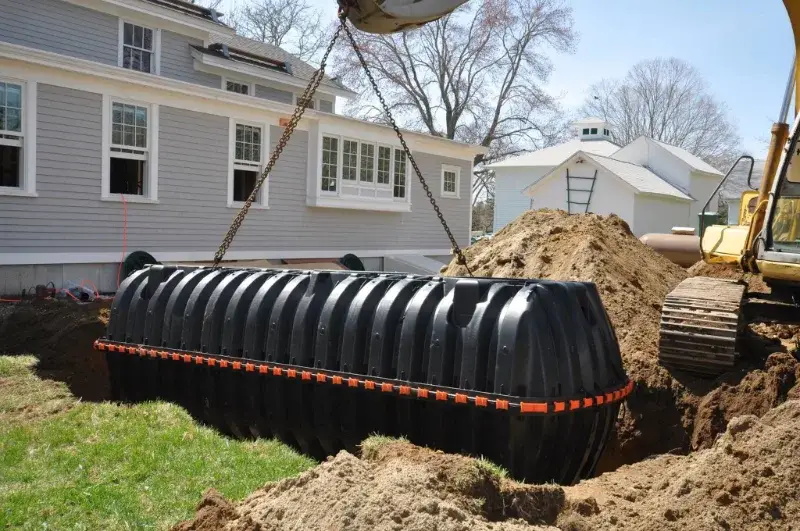
Septic System Maintenance in Tyler, Texas
Routine septic system maintenance keeps the components below ground working together the way they should. It is a practical way to protect your property, catch developing issues early, and plan service before a backup disrupts your day.
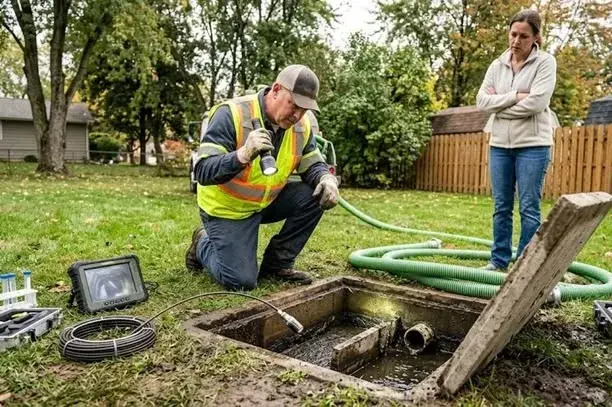
About This Service
Septic system maintenance is the steady, preventative care that helps your tank, pipes, drain field, and related components do their jobs without surprises. Rather than waiting for a slow drain or unpleasant odor to force an urgent decision, regular service gives you a clear picture of the system's condition. For properties in Tyler, that means better planning, fewer interruptions, and a cleaner, more dependable setup beneath the yard.
Warning signs are often easy to overlook at first. Drains that gurgle, toilets that flush slowly, wet or unusually green patches over the drain field, sewage odors outside, and water pooling near the tank area all deserve attention. Heavy East Texas rain can make drainage concerns more noticeable, especially around low-lying lots. If a system has not been checked in a while, a maintenance visit can identify whether the issue is buildup, a component concern, or surface water affecting the field.
Every visit starts with a conversation about the property's history, household use, and any changes that have been noticed. The team evaluates accessible system components, checks for obvious performance concerns, and explains what is found in plain language. When pumping, cleaning, adjustments, or a follow-up inspection is appropriate, the recommendations are based on the condition of the system rather than a one-size-fits-all schedule. Clear next steps make it easier to care for the system with confidence.
A well-maintained septic system should run quietly in the background: drains move normally, outdoor areas stay dry, and the drain field has the best possible chance to serve the property for years. Timing depends on tank size, occupancy, water use, and the materials entering the system, so maintenance plans are tailored to real conditions. In Tyler, timely attention is especially valuable before prolonged wet weather adds stress to already saturated soil.
Local knowledge matters when service decisions affect your yard and daily routine. Rose City Septic Co. has served the area since 2005 and understands the mix of established homes near the Azalea District, larger lots off Old Jacksonville Highway, and properties around Lake Tyler. From Hollytree to neighborhoods near South Broadway Avenue and Faulkner Park, the focus is on responsive communication, careful work, and recommendations that make sense for the site.
Small habits between visits can also make a meaningful difference. Keep vehicle traffic off the drain field, direct roof runoff away from septic components, avoid flushing wipes or grease, and make sure tank access remains identifiable. Maintenance is not about creating unnecessary work; it is about protecting an important part of the property before a minor concern becomes a messy repair. Schedule septic system maintenance today and get a straightforward plan for keeping everything operating properly.
The Maintenance Rule Texas Actually Enforces
For conventional systems, maintenance is a matter of good sense. For aerobic treatment units it is a legal requirement, and a great many Smith County homeowners discover that only when a report goes missing.
Under 30 TAC 285.7 an aerobic treatment unit must be covered by a contract with a licensed maintenance provider. Licensing is specific: an Installer Class II licence, a Class C or higher wastewater operator licence, or three years as a registered maintenance provider, plus TCEQ-approved coursework and a passed examination.
The provider must inspect each component at every site visit and document whether it functions. Reports go to both the permitting authority and the owner at least once every four months, or every six months where approved electronic monitoring is installed, and each must be filed within fourteen days of the test, including any complaints or monitoring notices from the owner.
Two years after installation, homeowners may perform their own maintenance on secondary treatment, non-standard treatment, drip irrigation and surface application systems — but the local permitting authority may impose stricter requirements, so confirm with Smith County before assuming it applies. Taking it on also means taking on the testing and the reporting, not just topping up chlorine.
When a property sells, that contract and its report history transfer with it. A gap in the record is a real question at closing.
A Maintenance Schedule Built for East Texas Ground
A maintenance plan that ignores the local soil is a calendar, not a plan. Around Tyler the clay-rich subsoils of the Bowie, Kirvin and Sacul associations perch water above them in winter and early spring, which means the system faces its hardest conditions in the wet months and its easiest in late summer.
That shapes the schedule. The wet-season visit is the one that matters, because an absorption area that is going to struggle will show it then and nowhere near it in August. We walk the disposal area for soft ground, standing water and unnaturally green growth when the ground is wet, because that is when the information exists.
Tank service is driven by household size against tank capacity, not by a fixed interval, and a garbage disposal shortens it considerably. Every visit checks the inlet, both compartments, the outlet baffle and the effluent filter, because a missing baffle sends solids straight to the field and no amount of later pumping undoes that damage.
On aerobic units the air pump, diffusers, control panel, alarm and spray heads get tested and the chlorine supply checked, and faults get caught while they are still inexpensive parts.
The rest is what the owner controls: keep vehicles, equipment and livestock off the disposal area permanently, keep roof and driveway drainage away from it, fix leaking fixtures, and route water softener discharge away from the tank. Those four habits add years to a system in this soil.
Septic Tank Service and Ongoing Maintenance in East Texas
Septic tank maintenance is the cheapest money you will ever spend on a system, and the least glamorous. Most of the failures we are called out to were avoidable twelve to twenty-four months earlier, when a routine septic tank service would have caught a missing baffle, a tired air pump or an absorption area starting to hold water in a wet spring.
Homeowners searching for septic service near me are usually at one of two points: something has just gone wrong, or they have just bought a property and want the system on a schedule before it does. Rose City Septic Co. provides septic services across Tyler, Whitehouse, Bullard, Flint, Lindale, Chandler, Jacksonville and Kilgore, and takes both calls the same way — look first, quote second.
If the system is aerobic, maintenance is not optional. Texas requires an aerobic treatment unit to be under contract with a licensed maintenance provider, with inspection reports filed to the permitting authority and the owner at least every four months, or every six months where approved electronic monitoring is installed. When you compare septic tank services near me, ask whether the provider is licensed to file those reports, because an unlicensed visit does not satisfy the rule.
There are plenty of septic service providers who will sell a yearly visit and do the same fifteen minutes each time. A useful maintenance visit changes with the season: the wet-season call is the one that matters on East Texas clay, because an absorption area that is going to struggle shows it in February and nowhere near it in August.
How the Job Actually Runs, Step by Step
No surprises is mostly a matter of telling you the order things happen in before they happen. This is how a job runs from your first call to the day it is signed off.
- You call, we ask what the system is doingSymptoms, last service date, system type and access. It tells us what to bring on the truck.
- We schedule around your property, not a route sheetBecause we work Tyler and the surrounding towns daily, most visits land within days rather than weeks.
- Lids located and openedOn properties with no risers this is the part that takes the time. We find them rather than guessing.
- The work itselfDone properly and completely, with both compartments and every component covered rather than the quick version.
- Inspection while the lid is offInlet, outlet baffle, effluent filter and the disposal area walked. This is included, not billed as an extra.
- You get told where the system standsIncluding when the honest answer is that nothing needs doing for another few years.
Why Rose City Septic Co.
- Working East Texas since 2005Two decades on Smith County ground. The soil behaviour described on this page is not research, it is what we dig through.
- We run the county process weeklySite evaluation, planning materials, permit to construct, final inspection. An installer who files these constantly moves them faster than one who does not.
- Diagnosis before the quote, every timeWe do not price a system or a repair over the phone. The boring log or the open tank decides the number, and we would rather lose the job than guess at it.
- Licensed for aerobic maintenance reportingTexas requires aerobic units to be under contract with a licensed maintenance provider filing reports at least every four months. We can hold that contract rather than leaving you to find someone who can.
- County-inspected, on the recordWork that alters a system gets permitted and inspected, so what you own is documented. That matters at resale far more than it does on the day.
- Local for realTyler, Whitehouse, Bullard, Flint, Lindale, Chandler, Jacksonville and Kilgore are the roads we work daily — not a service radius drawn on a map from another city.
The Maintenance Obligations Texas Puts on You
Maintenance on a conventional system is a matter of protecting an asset. On an aerobic system it is a legal requirement. Under 30 TAC 285.7, residential aerobic units with surface application must be covered by a maintenance contract with a licensed maintenance provider, with service visits and reports filed with the permitting authority, which in this area is Smith County Environmental Health.
Those visits are not a formality. They cover the aerator, the chlorinator and disinfection levels, the pump and floats, the spray heads and the wetted area, plus a check on sludge accumulation in the trash compartment. Miss the reports and the system is out of compliance even while it runs, and the county writes to the property owner, not to whoever was supposed to be servicing it.
Conventional systems carry no reporting requirement, but the same nuisance rule applies to both. Sewage surfacing on the ground or leaving the property is a violation, and the usual route to that violation is a drain field slowly loaded past its capacity by a tank that was never pumped.
We hold the licence to carry aerobic maintenance contracts and file the reports, and for conventional systems we simply keep you on a sensible interval based on what we actually find in the tank.
A Maintenance Calendar Built for East Texas
Maintenance here is not evenly spread across the year, because the pressure on the system is not either. The wet season from late autumn through May is when the disposal field has the least capacity, as rain saturates the ground and a perched water table forms above the clay subsoil across Smith County. Everything you do before that season is worth more than the same work done after it.
So the useful shape of a year looks roughly like this. Early autumn is when to pump if the tank is due, clean the effluent filter, and check lids and riser seals so winter rain stays out of the tank. Winter is when to keep an eye on the disposal area for surfacing, and on aerobic systems to protect exposed lines and heads through the short freezes. Spring is when the field is at its most stressed, which makes it the best time to spot a developing problem while it is still a repair.
Summer is equipment season. Aerators and pumps run hot, chlorine tablets dissolve faster than owners expect and the chamber runs empty, and shrinking clay pulls at joints and lids.
Household load matters more than any of it. Holiday guests, a new occupant or an added bathroom change the arithmetic, and a service interval that fitted two people does not fit five.
Frequently Asked Questions
Frequently Asked Questions
These answers address common septic questions from Tyler-area customers. Every property is different, so a direct conversation is the best way to apply this information to your system.
How often should I schedule septic system maintenance in Tyler?
Most systems benefit from regular professional attention, but the right interval depends on tank size, household occupancy, water use, and system condition. A property with frequent guests or high water demand may need service sooner than a lightly used home. East Texas rainfall and soil conditions can also make inspections especially useful when drainage changes. A maintenance visit establishes a practical schedule based on what your system actually needs.
What affects the cost of septic system maintenance?
Maintenance costs vary according to tank access, tank size, pumping needs, the condition of accessible components, and whether a concern requires further evaluation. A straightforward scheduled visit is usually easier to plan than service after a backup or drain-field failure. Before work moves forward, the scope should be explained clearly so there are no assumptions about what is included. Keeping access clear and sharing system history can help make the visit more efficient.
What happens during a septic maintenance appointment?
The appointment begins with questions about drainage, odors, past pumping, and any recent changes around the property. Accessible components are reviewed, and the system is assessed for signs of buildup, wear, or drainage trouble. If pumping or additional work is needed, the findings and recommended next steps are explained in straightforward terms. The goal is to leave you with useful information, not a confusing list of technical jargon.
Can routine maintenance help my septic drain field last longer?
Yes, regular care can help reduce the conditions that put unnecessary stress on a drain field. Removing accumulated solids at the appropriate time helps prevent material from moving out of the tank and toward the field. Good daily habits matter too, including conserving water, keeping grease and wipes out of drains, and avoiding parking over the field. Maintenance cannot reverse every existing issue, but it can help spot trouble early and support long-term performance.
What does a septic tank service visit actually include?
Opening the tank and checking both compartments, inspecting the inlet, the outlet baffle and the effluent filter, testing the pump and control panel on aerobic systems, and walking the disposal area for soft ground or standing water. Pumping happens when the tank needs it, not automatically. You get told where the system stands, including when the answer is that nothing needs doing for another few years.
Do you offer septic service near me outside Tyler?
Yes. Our septic services cover Tyler, Whitehouse, Bullard, Flint, Lindale, Chandler, Jacksonville and Kilgore. Because those are the roads we work daily, routine septic tank maintenance visits are usually scheduled within days.
How do I compare septic service providers for an aerobic system?
Check that the provider holds a licence to maintain aerobic treatment units — an Installer Class II licence, a Class C or higher wastewater operator licence, or three years as a registered maintenance provider, plus TCEQ coursework and exam. Reports have to reach the permitting authority and you at least every four months. A cheaper provider who cannot file those reports leaves you non-compliant.
How often should septic tank maintenance happen in East Texas?
It follows household size against tank capacity rather than a fixed calendar, and a garbage disposal shortens the interval considerably. What we hold firm on is the timing of the inspection: at least one visit should fall in the wet season, because the clay subsoils here perch water in winter and early spring and that is when a marginal absorption area reveals itself.
Get Clear Septic Answers Today
Talk with a local team that has served Tyler since 2005. Tell us about your property, and we will help you understand the right next step with a free estimate.
(903) 857-7325Or fill out the form — we'll be in touch shortly.